
Earth’s Place in Space Curriculum Resources
Explore Earth’s Place in Space concepts with our comprehensive science curriculum resources aligned with NGSS standards. Interactive and printable resources for K-12 learners across all grade levels.
Reading Results

Understanding Sunspots
Sunspots are fascinating dark patches on the Sun's surface caused by intense magnetic activity that lowers the temperatu...

What are Solar Flares?

What is Milky Way
This engaging passage introduces Grade 4-5 students to the Milky Way, our home galaxy. Students will learn that the Milk...
5-ESS1-15-ESS1-2RI.3.1RI.3.4

Sunspots and Solar Flares
This quiz is designed to test your understanding of the fascinating phenomena of sunspots and solar flares, as described...
RI.4.1RI.4.4RI.5.1ESS1.A

Andromeda Galaxy
This engaging science passage introduces Grade 4-5 students to the Andromeda Galaxy, our closest large galactic neighbor...
5-ESS1-15-ESS1-2RI.3.1RI.3.4
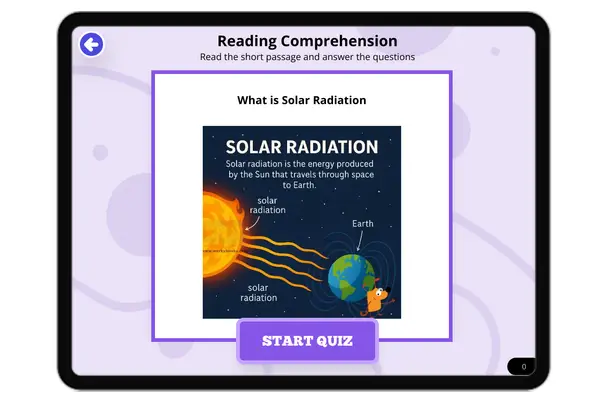
What is Solar Radiation
This NGSS-aligned science reading passage for middle school students explores the concept of solar radiation. Solar radi...
MS-ESS1-1
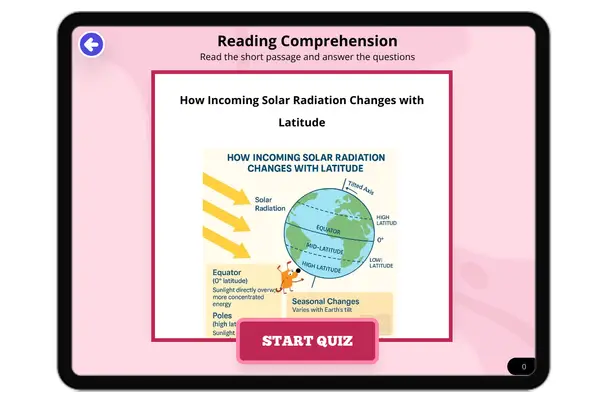
How Incoming Solar Radiation Changes with Latitude
This NGSS-aligned science reading passage helps middle school students understand how solar radiation, or insolation, ch...
MS-ESS1-1
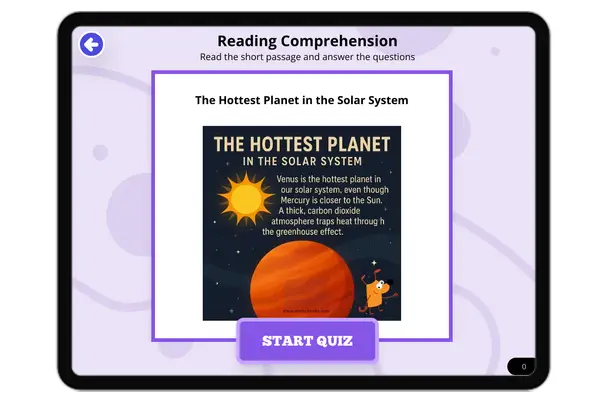
The Hottest Planet in the Solar System
This NGSS-aligned middle school reading passage explains why Venus is the hottest planet in our solar system. Students l...
MS-ESS1-3

Patterns In The Sky
This engaging 1st-grade reading comprehension passage, 'Being a Sky Observer,' directly aligns with NGSS Standard 1-ESS1...
1-ESS1-1

Sun Pattern
This reading passage on patterns of the Sun supports the NGSS 1-ESS1-1 standard for understanding the Sun's apparent mov...
1-ESS1-1

Earth's Place in the Universe
This reading passage explains Earth's place in the universe, supporting NGSS 1-ESS1-1. It describes how Earth is one of ...
1-ESS1-1

Moon Phases
This informational reading passage explores the patterns of the Moon to support NGSS 1-ESS1-1. It describes how the Moon...
1-ESS1-1

When Was Neptune Discovered?
This reading passage explains how Neptune, the eighth planet from the Sun, was discovered in 1846 by astronomers Johann ...
1-ESS1-1

The Diameter of Earth
This science reading passage explains the diameter of Earth, describing it as about 12,742 kilometers or 7,918 miles acr...
5-PS2-1

Sun, Moon, and Stars
This engaging 1st-grade reading comprehension passage, 'The Sun, Moon, and Stars,' is perfectly aligned with NGSS Standa...
1-ESS1-1
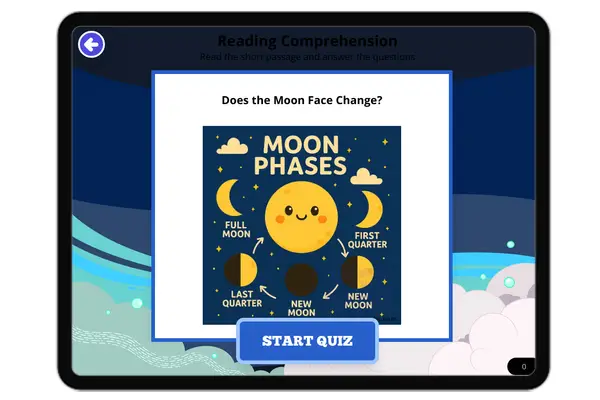
Does the Moon Face Change?
This engaging 1st-grade reading comprehension passage, 'The Moon's Changing Face,' is specifically designed to align wit...
1-ESS1-1
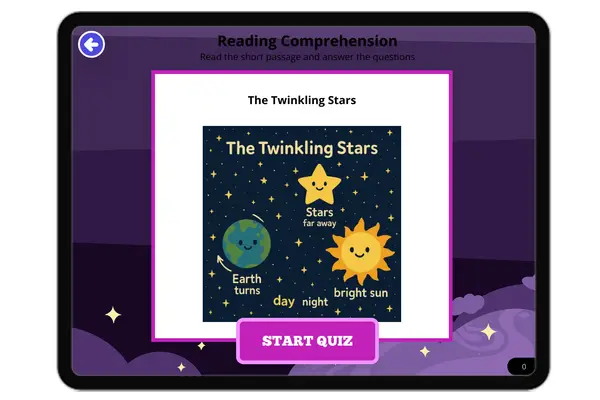
The Twinkling Stars
This engaging 1st-grade reading comprehension passage, 'The Twinkling Stars,' is designed to meet NGSS Standard 1-ESS1-1...
1-ESS1-1
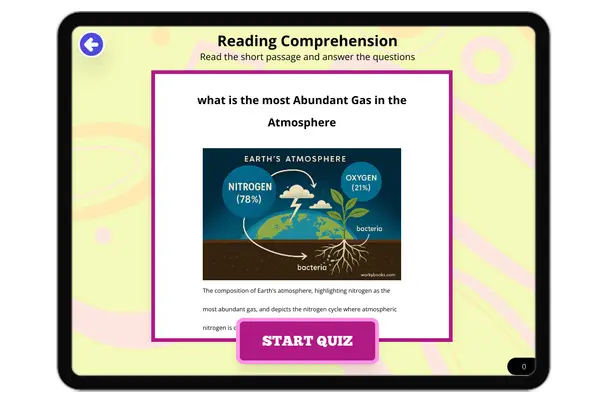
What is the Most Abundant Gas in the Atmosphere
This NGSS-aligned reading passage for middle school students explores nitrogen, the most abundant gas in Earth's atmosph...
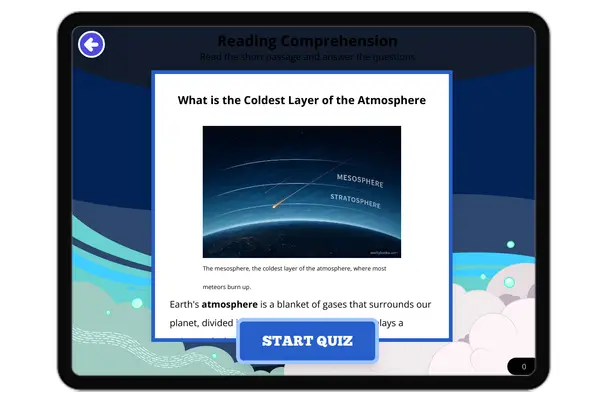
What is the Coldest Layer of the Atmosphere
"This NGSS-aligned passage is designed for middle school students (grades 6-8) to introduce them to the mesosphere, the ...
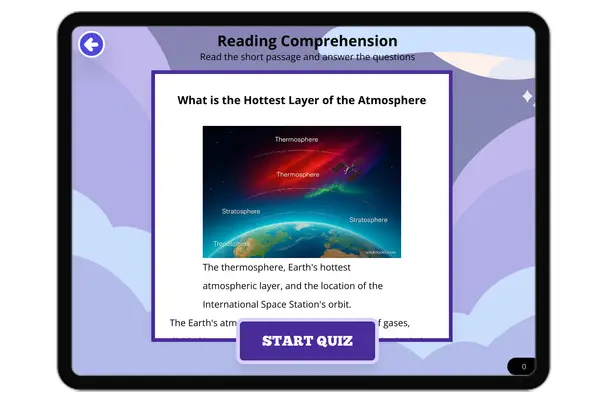
What is the Hottest Layer of the Atmosphere
This reading passage delves into the thermosphere, the hottest layer of Earth's atmosphere, and its fascinating characte...
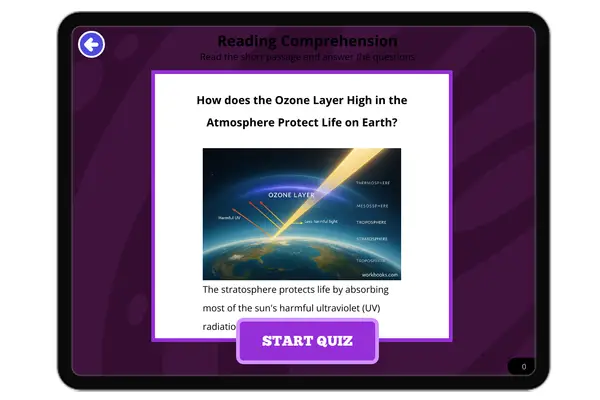
How does the Ozone Layer High in the Atmosphere Protect Life on Earth?
"This educational science passage, aligned with NGSS standards, explores the critical role of the ozone layer in shieldi...
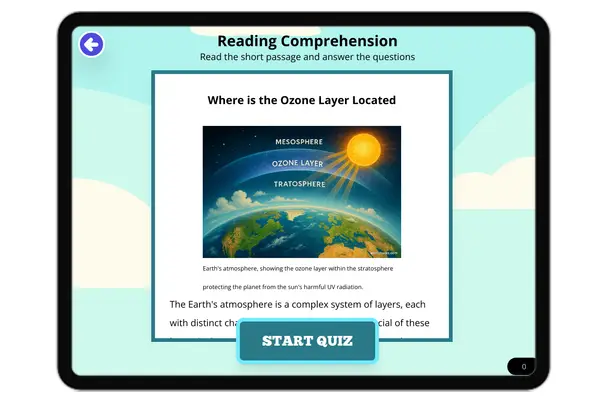
Where is the Ozone Layer Located
"This NGSS-aligned reading passage for middle school students explores the critical role of the ozone layer. It details ...
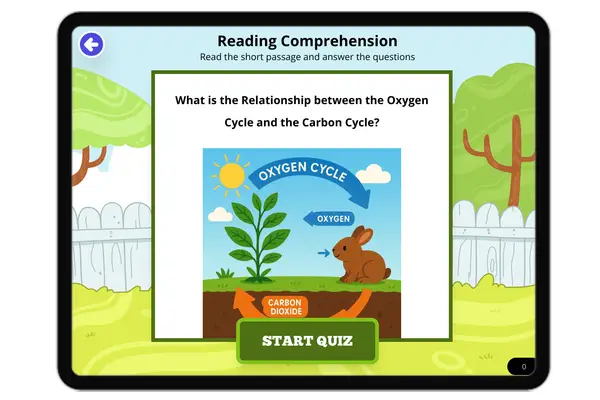
What is the Relationship between the Oxygen Cycle and the Carbon Cycle?
"This reading passage, designed for a middle school audience, explains the fundamental relationship between the oxygen c...
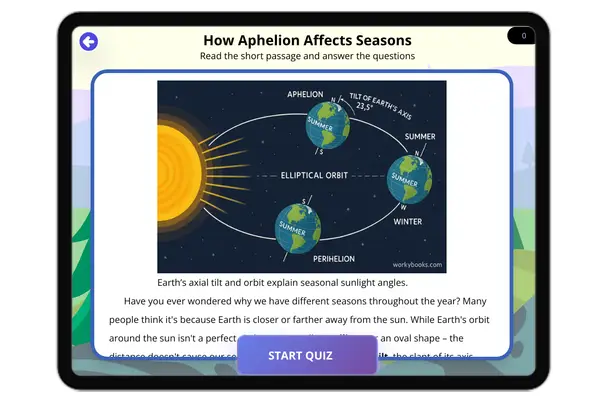
How Aphelion Affects Seasons
This educational passage, audio-integrated for enhanced learning, explores the fascinating topic of "How Aphelion Affect...
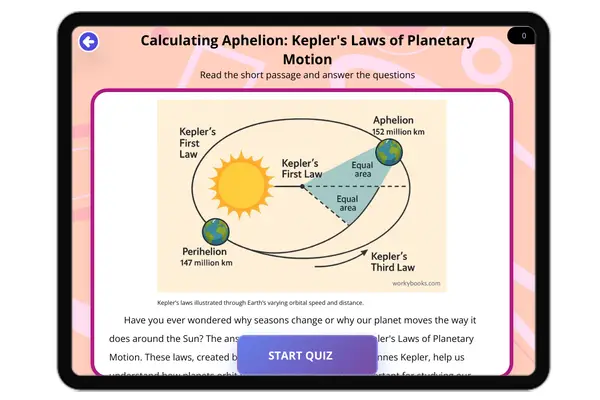
Calculating Aphelion: Kepler's Laws of Planetary Motion
This engaging educational content, complete with audio integration, delves into Kepler's Laws of Planetary Motion, focus...
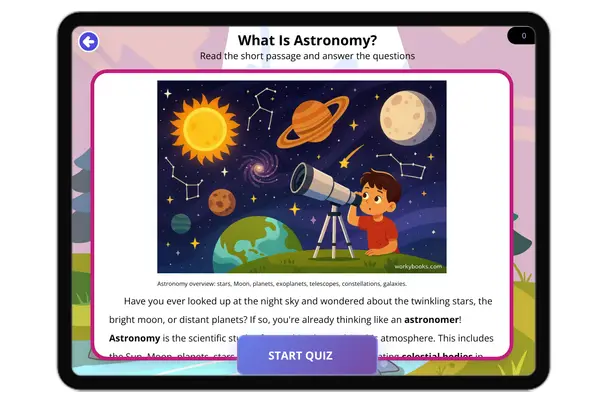
What Is Astronomy?
This educational content package provides an engaging, audio-integrated reading passage titled "What Is Astronomy?" for ...
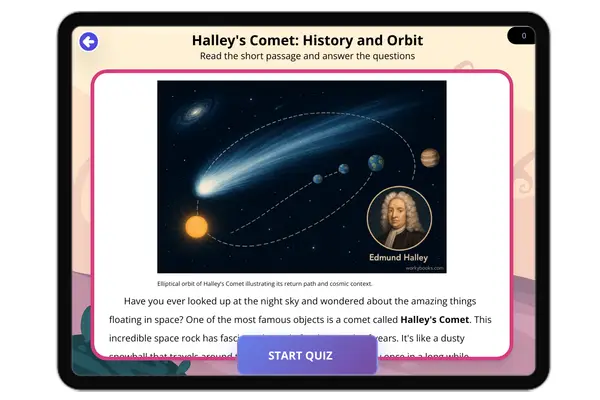
First Scientist To Use The Telescope In Astronomy
This audio-integrated passage introduces students to Galileo Galilei, often called the "father of observational astronom...
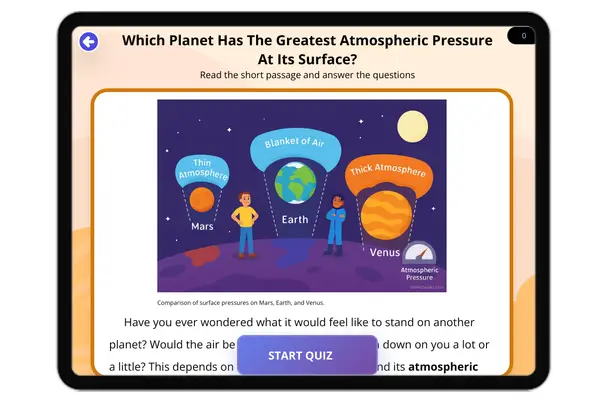
Which Planet Has The Greatest Atmospheric Pressure At Its Surface?
This educational passage, audio-integrated for diverse learners, explores the fascinating question: Which planet has the...
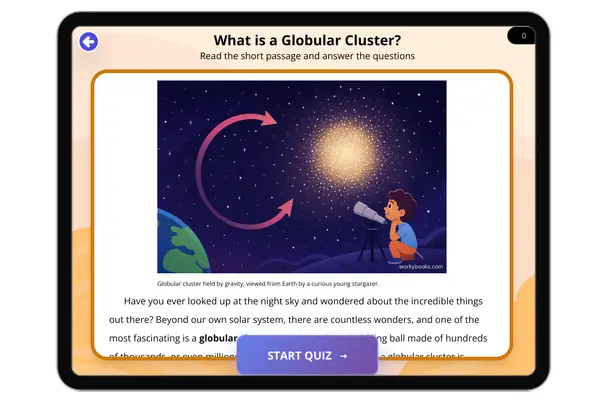
What is a Globular Cluster?
This passage explores what a globular cluster is, focusing on their characteristics, formation, and the powerful role of...
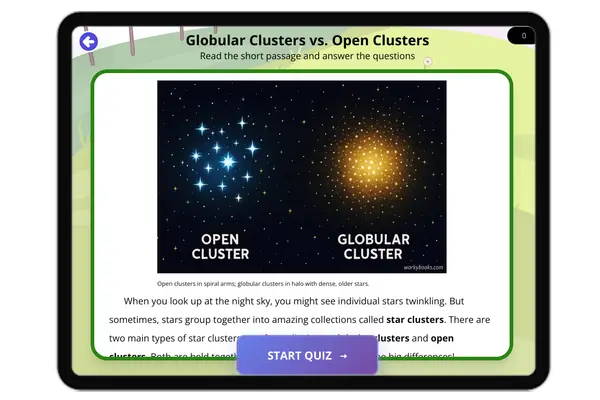
Globular Clusters vs. Open Clusters
This educational passage, 'Globular Clusters vs. Open Clusters,' is designed for a 6th-grade reading level and provides ...

The Role of Globular Clusters in Understanding Galactic Evolution
This passage, integrated with audio, explores 'The Role of Globular Clusters in Understanding Galactic Evolution,' a top...
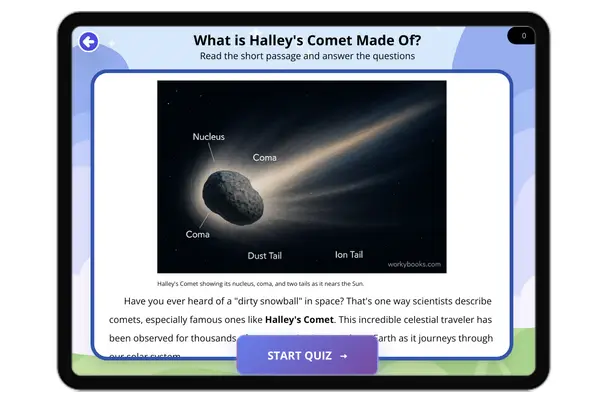
What is Halley's Comet Made Of?
This educational reading passage, 'What is Halley's Comet Made Of?', delves into the fascinating composition of one of t...
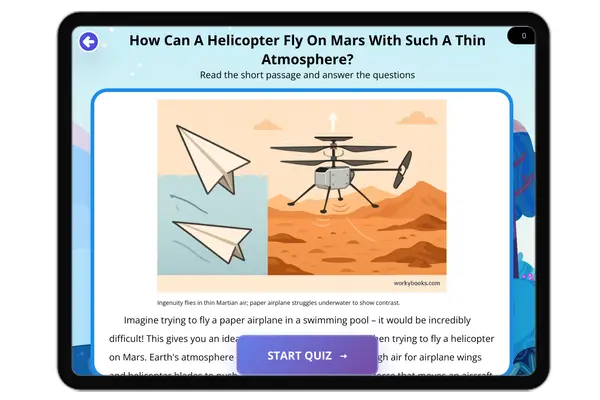
How Can A Helicopter Fly On Mars With Such A Thin Atmosphere?
This engaging, audio-integrated reading passage explores the fascinating challenge of how the Ingenuity helicopter manag...
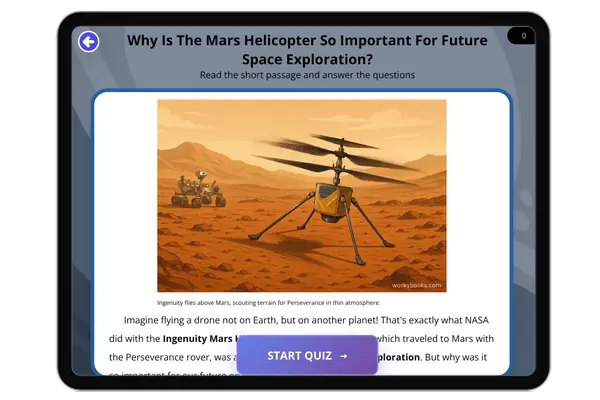
Why Is The Mars Helicopter So Important For Future Space Exploration?
This engaging passage explores the groundbreaking role of the Ingenuity Mars Helicopter in future space exploration. Stu...
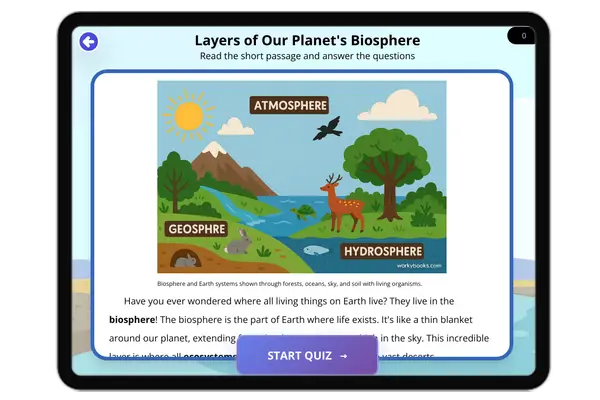
Layers of Our Planet's Biosphere
This educational content features an audio-integrated reading passage titled 'Layers of Our Planet's Biosphere,' designe...
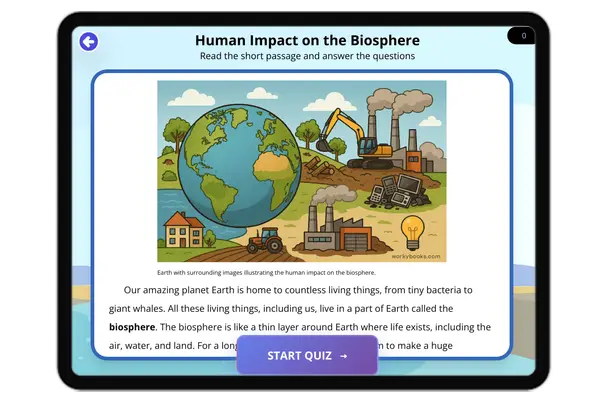
Human Impact on the Biosphere
This educational passage, audio integrated, focuses on 'Human Impact on the Biosphere,' exploring how increases in human...
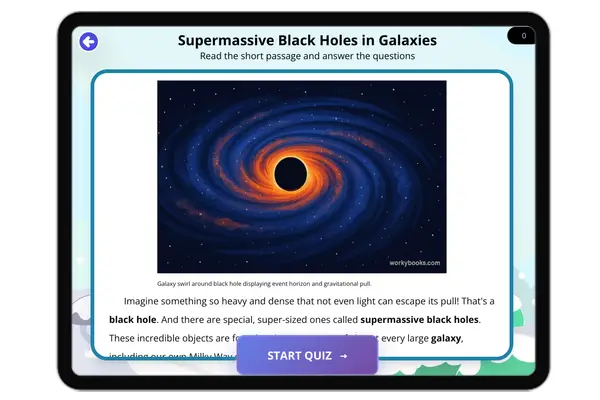
Supermassive Black Holes in Galaxies
This educational passage, audio integrated for an enhanced learning experience, delves into the fascinating world of sup...
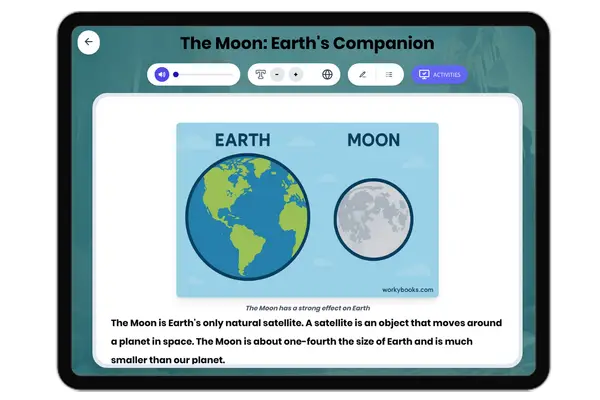
Earth's Moon Facts
This engaging science passage, 'The Moon: Earth's Companion,' is designed for Grade 4-5 students and aligns with NGSS ge...
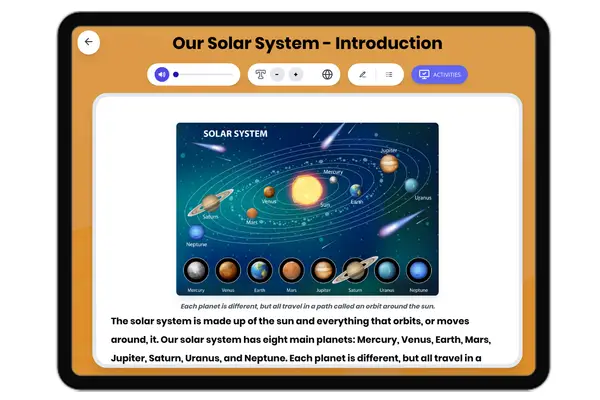
Our Solar System - Introduction
This engaging passage introduces Grade 4-5 students to our solar system, following NGSS science standards. Students will...
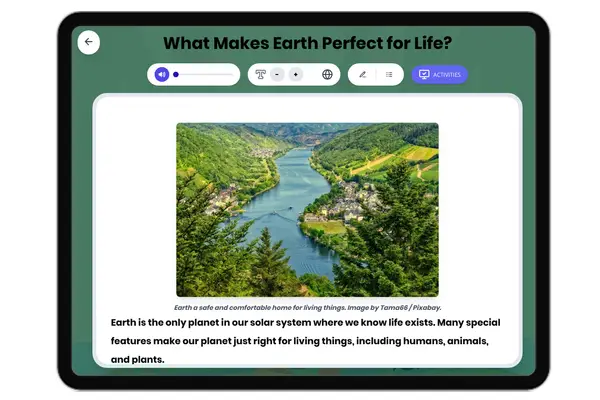
What Makes Earth Perfect for Life?
This Grade 4-5 science passage, aligned with NGSS standards, explores the essential features that make Earth the perfect...
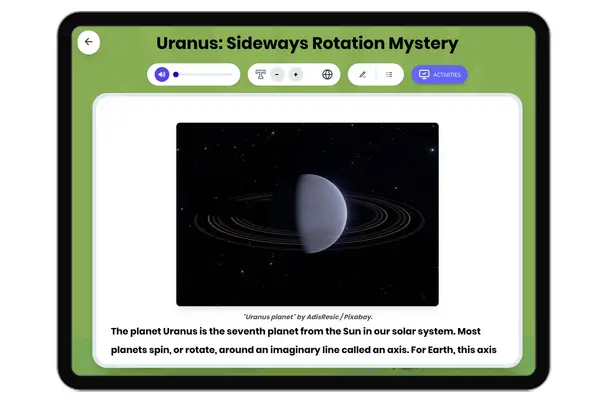
Uranus: Sideways Rotation Mystery
This educational passage, 'Uranus: Sideways Rotation Mystery,' is designed for Grade 4-5 students and aligns with NGSS s...
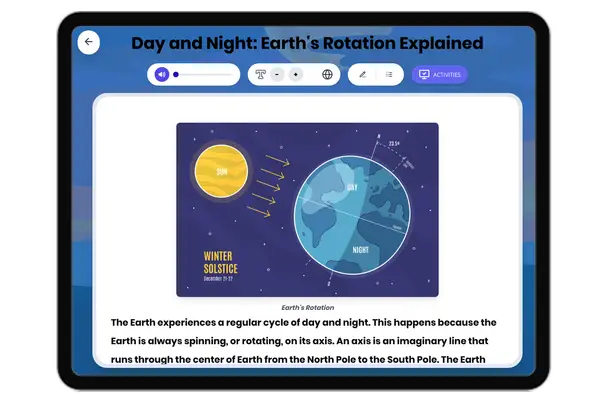
Why Do We Have Day and Night
This engaging science passage, 'Day and Night: Earth's Rotation Explained', introduces Grade 4-5 students to the concept...

Mars and Jupiter: Big and Small Planet
This engaging science passage, "Mars and Jupiter: Size Matters," is designed for Grade 4-5 students and aligns with NGSS...
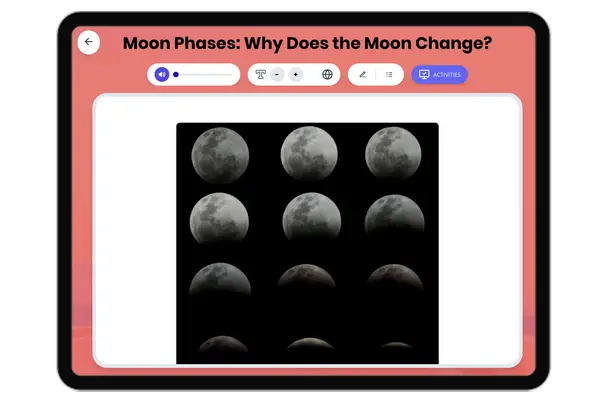
Moon Phases: Why Does the Moon Change?
This Grade 4-5 science passage, aligned with NGSS standards, explains why the Moon appears to change shape in the sky. S...
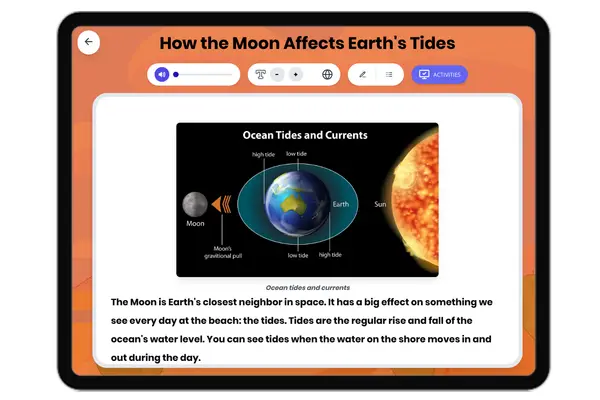
Moon and Tides
This Grade 4-5 science passage explores how the Moon affects Earth's tides, aligned with NGSS standards. Students will l...
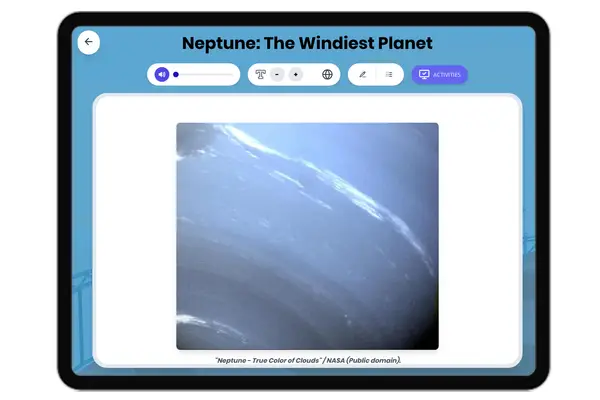
Neptune: The Windiest Planet
This engaging Grade 4-5 science passage explores Neptune, the windiest planet in our solar system. Students will discove...
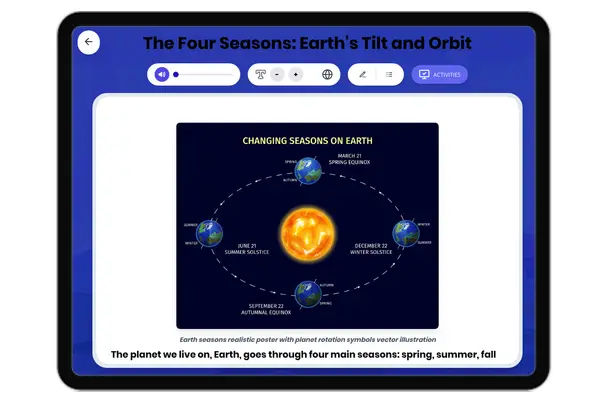
The Four Seasons: Earth's Tilt and Orbit
This engaging Grade 4-5 science passage, aligned with NGSS standards, explores how Earth's tilt and orbit cause the four...
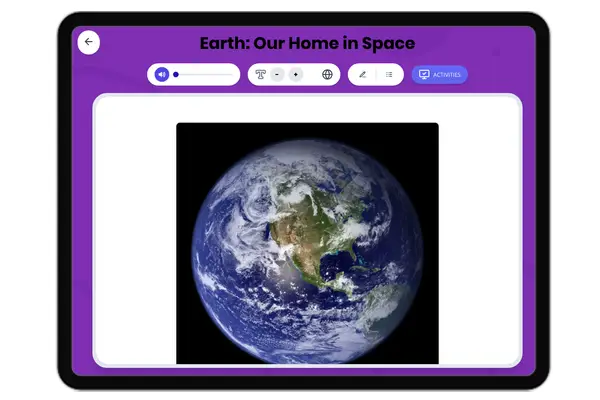
Earth: Our Home in Space
This engaging Grade 4-5 science passage, aligned to NGSS, introduces students to Earth's special place in the solar syst...
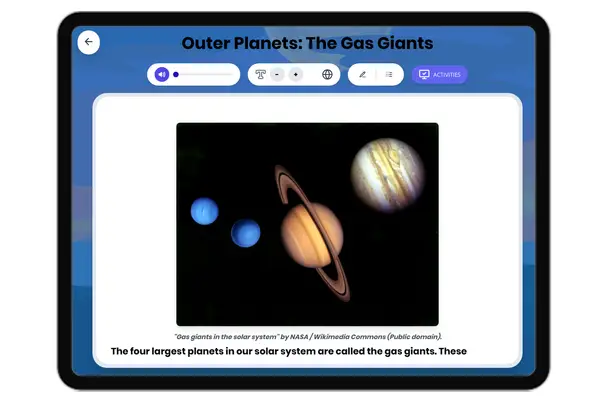
Outer Planets: The Gas Giants
This engaging science passage for Grade 4-5 students explores the outer planets of our solar system, known as the gas gi...
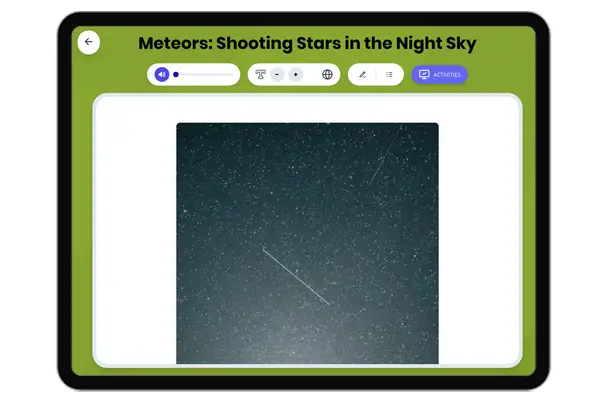
What Are Meteors?
This engaging science passage introduces Grade 4-5 students to the fascinating world of meteors, often called shooting s...
Get more from Workybooks
Three ways to use Workybooks — pick what fits.
Start free
$0
No credit card required
- Access to limited resources
- 1 download & 1 Quick Play per day
- 30-day assignment history
Pay as you go
$1.50
Per resource, one-time
- Download and keep forever
- Online access while account is active
- No subscription, no auto-renew
Open any resource and click Buy.
Best value
Unlock everything
$19.99 / year
All 5,000+ resources, unlimited use
- Download any worksheet, reader or printable
- Play every game and assign to classrooms
- Cancel anytime, no ads
Cancel anytime · No ads · Trusted by 30,000+ teachers