

How might climate change affect animals? — Reading Comprehension
Rate this
Premium Resource
Present
Present in classroom. No work saved
Assign
Classroom with student accounts, Track progress
Quick Play
No student accounts, assign with a link
Grades
2
3
4
Standards
RI.3.1
RI.4.1
4.ESS2.D
4-ESS3
PRINT+DIGITAL RESOURCE
This learning resource is available in interactive and printable formats. The interactive worksheet can be played online and assigned to students. The Printable PDF version can be downloaded and printed for completion by hand.
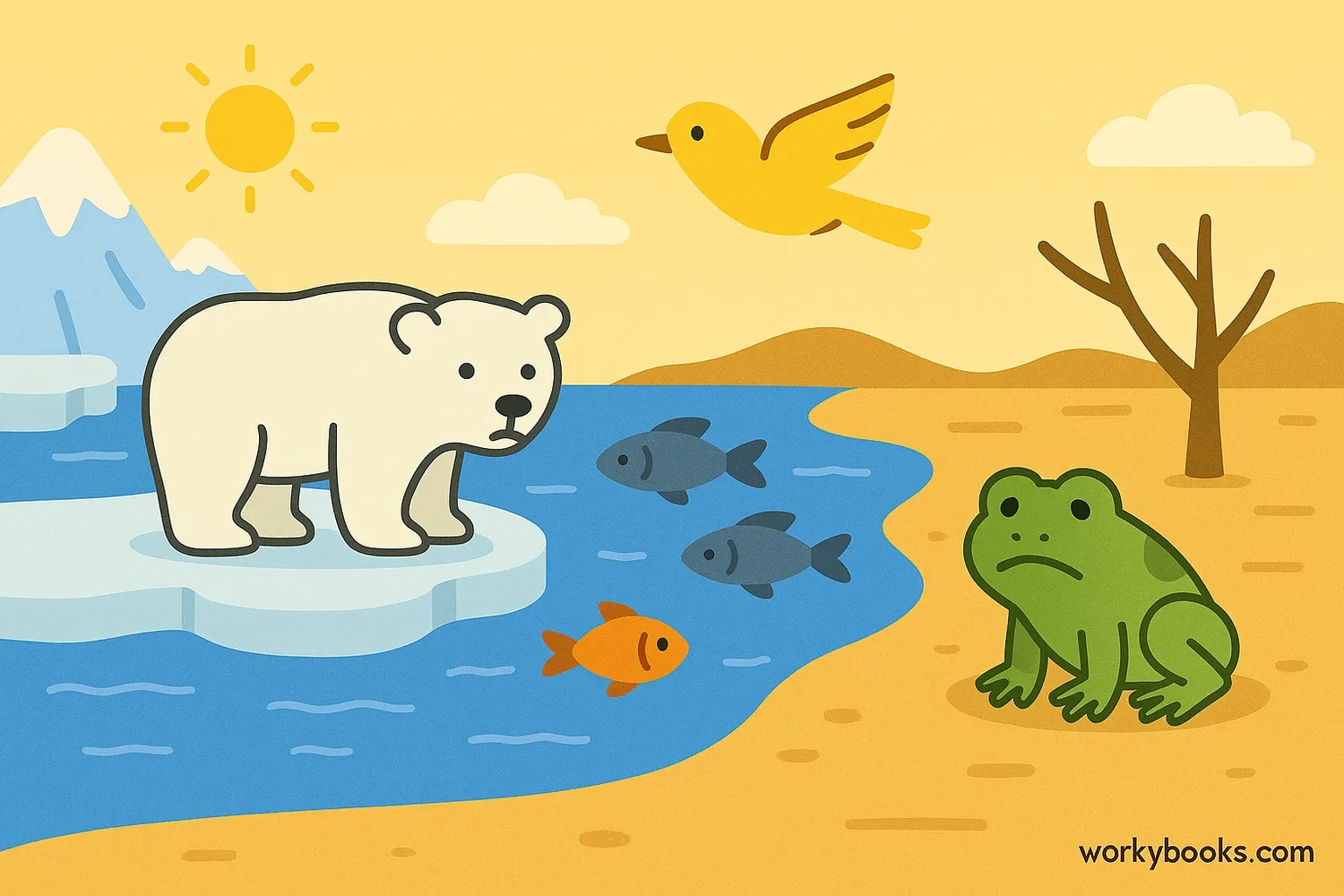
This passage explains to children how climate change impacts animal life. It uses specific examples like polar bears losing their icy habitats and birds needing to migrate to new areas for food. The text also mentions effects on marine life and amphibians. By illustrating how climate change can alter where animals live, what they eat, and how they survive, the passage helps children understand the broad ecological implications of global warming, emphasizing the interconnectedness of climate and wildlife.
CONTENT PREVIEW
Expand content preview
Climate change forces animals to adapt, migrate, or face extinction.
Climate Change and Animal Habitats
Climate change is causing big changes for animals all over the world. Habitat means the place where an animal lives. When the climate gets warmer or wetter, animal habitats can change or disappear. For example, in the Arctic, polar ice is melting. Animals like polar bears, penguins, and seals lose the ice they use for hunting and resting. In the ocean, warmer water causes coral reefs to bleach and die, which means fish lose their homes. Forests are drying out, so wildfires happen more often and destroy animal homes. When sea levels rise, beaches where sea turtles nest can flood.
Food and Survival
Animals depend on having the right food at the right time. But climate change can mix up this timing. Birds might arrive to nest before the insects they eat have hatched. Some plants bloom earlier than usual, so pollinators like bees and butterflies miss the flowers. If prey animals move to new areas to find cooler weather, predators may not find enough food. In the ocean, acidification makes it hard for shellfish to form their shells.
Migration and Range Changes
Many animals move, or migrate, to survive. As the Earth warms, animals move toward the poles or up mountains, looking for cooler places. Eventually, some mountain animals, like the pika, run out of places to go. Some species appear in new areas, while others have their migration patterns mixed up.
Examples of Animals Affected
Polar bears are starving as the sea ice disappears. Sea turtles have more female babies because warmer sand changes egg development. Coral reef fish are losing their colorful homes. Pikas, which live on high mountains, have nowhere cooler to escape. Monarch butterflies depend on milkweed, but the timing of the plant’s growth is changing.
Extinction Risk and Hope
Scientists warn that if climate change continues, 1 in 6 species could face extinction. But there is hope! People are helping by making wildlife corridors, reducing greenhouse gases, and protecting habitats. Some animals are finding ways to adapt, and every bit of climate action helps give them more time.
Comparison: Climate change is like someone rearranging your house while you're living in it—the kitchen moves, your bedroom disappears, and dinner shows up at random times!
Interesting Fact: Some animals, like certain butterflies and birds, are already changing when they migrate or lay eggs because of climate change!
What is a habitat?
An animal's homeA type of foodA kind of weatherA mountain peak
Why are coral reefs dying?
Colder waterWarmer waterToo many fishToo much rain
What happens to sea turtles when sand gets warmer?
More female babiesNo eggs hatchMore foodShells get softer
Which animal climbs higher up mountains?
PikaPenguinPolar bearMonarch butterfly
Why do some animals move to new places?
To find cooler habitatsTo escape peopleTo sleep moreTo make friends