
The Blue Whale- Endangered Species
Interactive passage with audio narration, comprehension questions, and printable PDF.
By completing this purchase you agree to our Terms of Use and Privacy Policy. Your subscription renews automatically until you cancel. You can cancel anytime from your account settings. All sales are final and non-refundable. Digital content is available for download in your account immediately upon purchase.
What's included
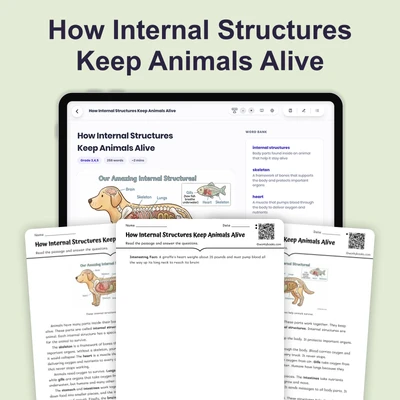
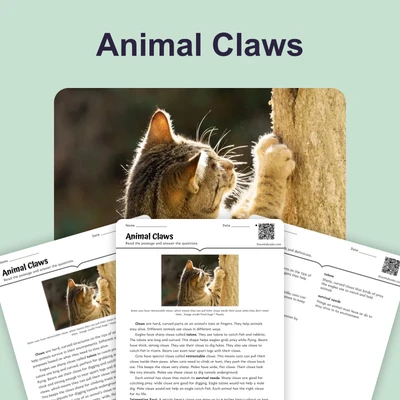
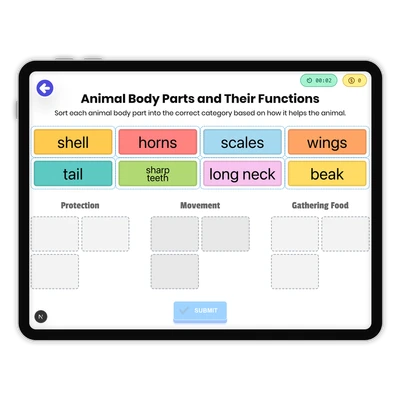
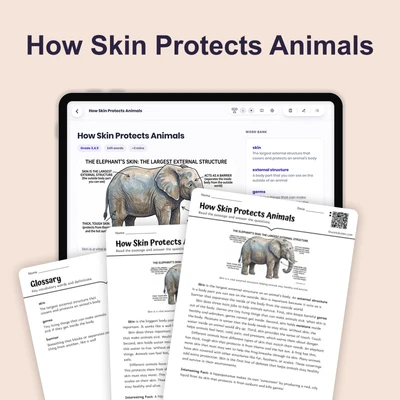
The Blue Whale- Endangered Species preview and details
About this printable The Blue Whale- Endangered Species science reading passage, NGSS-aligned (Grades 6-9)
Sample passage and quiz from The Blue Whale- Endangered Species
Reading passage and comprehension quiz preview
The Blue Whale- Endangered Species
The blue whale is the largest animal ever known to have existed, reaching lengths of up to 100 feet and weighing as much as 200 tons. Despite its enormous size, this gentle giant feeds almost exclusively on tiny shrimp-like creatures called krill.
Blue whales are found in oceans worldwide, from the Arctic to the Antarctic. They migrate long distances to feed and breed, often traveling thousands of miles each year.

Unfortunately, blue whales are listed as an endangered species under the U.S. Marine Mammal Protection Act. They were nearly driven to extinction in the 20th century due to commercial whaling, which killed over 360,000 blue whales. Although whaling is now banned, blue whales still face threats from ship strikes, ocean noise pollution, and climate change, which affects their food supply.
Conservation efforts include tracking blue whale populations, creating protected marine areas, and reducing ship speeds in whale habitats. These measures have helped some populations recover, but the species remains at risk.
Fun fact: A blue whale’s heart is the size of a small car, and its tongue can weigh as much as an elephant!
Comprehension quiz (8 questions)
1. What is the blue whale’s diet?
2. How long can a blue whale grow?
3. Why are blue whales endangered?
4. What is one threat to blue whales today?
5. What is one conservation effort for blue whales?
6. What is the fun fact mentioned in the passage?
7. Where are blue whales found?
8. Why is protecting blue whales important?
Perfect for the way you teach
- Build comprehension skills
- Auto-graded quiz
- Differentiated reading
- Read together at home
- Improve fluency
- Quiet reading time
- Reading curriculum support
- Independent practice
- Track Lexile growth