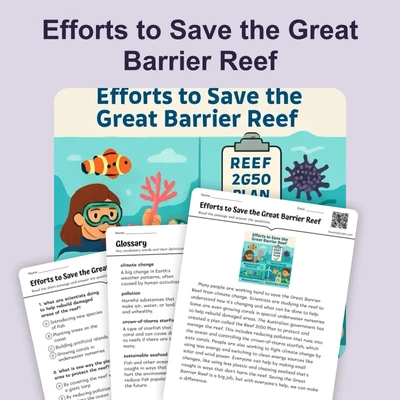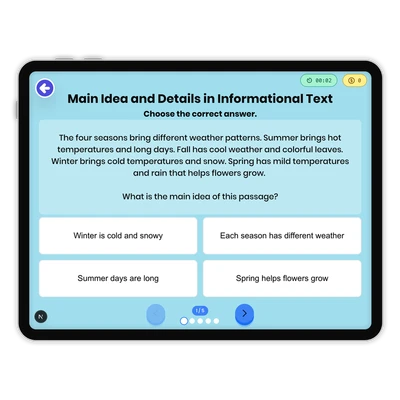

This learning resource is available in interactive and printable formats. The interactive worksheet can be played online and assigned to students. The Printable PDF version can be downloaded and printed for completion by hand.
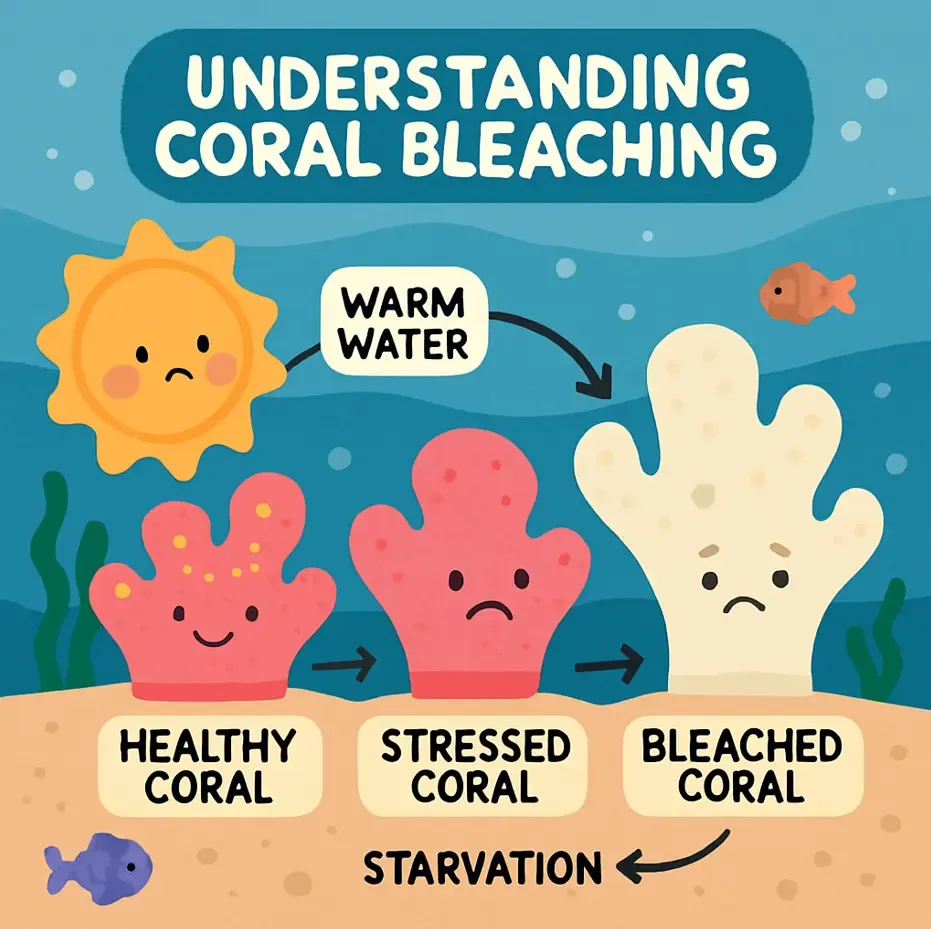
This passage delves into the phenomenon of coral bleaching in the Great Barrier Reef. It explains how rising water temperatures stress corals, causing them to expel their symbiotic algae. The text describes the visible effects of bleaching - the coral turning white - and the dire consequences if conditions don't improve quickly. It highlights recent major bleaching events and their widespread impact on the reef. The passage underscores coral bleaching as one of the most significant threats to the Great Barrier Reef's future. Keywords: coral bleaching, Great Barrier Reef, climate change, marine ecosystem, symbiotic algae, coral death, ocean warming, environmental stress, reef conservation, marine biology.
CONTENT PREVIEW
Expand content preview
Coral bleaching is a big problem for the Great Barrier Reef. It happens when corals get stressed, usually because the water is too warm. Corals have tiny algae living inside them that give them their bright colors and provide them with food. When corals are stressed, they push out these algae. This makes the corals turn white or "bleached." Bleached corals aren't dead, but they are in danger. Without their algae, corals don't get enough food and can starve. If the water doesn't cool down quickly, the bleached corals might die.
In recent years, the Great Barrier Reef has experienced several major bleaching events. These events have affected large parts of the reef, causing some areas to die. Coral bleaching is one of the biggest threats to the future of the Great Barrier Reef.
What usually causes coral bleaching?
Water that is too coldWater that is too warmToo much sunlightNot enough salt in the water
What gives corals their bright colors?
Special rocksTiny fishTiny algaeUnderwater lights
What happens when corals are bleached?
They turn bright redThey grow biggerThey turn whiteThey sink to the bottom of the ocean
What do the algae provide to the corals?
Protection from predatorsFoodAbility to floatAbility to glow in the dark
What happens to bleached corals if the water doesn't cool down quickly?
They might dieThey grow back strongerThey change colorThey move to a new location
According to the passage, how serious is the threat of coral bleaching to the Great Barrier Reef?
It's a minor problemIt's one of the biggest threatsIt's not a threat at allIt only affects a small part of the reef
Perfect For:
👩🏫 Teachers
• Reading comprehension practice
• Auto-graded assessments
• Literacy skill development
👨👩👧👦 Parents
• Reading practice at home
• Comprehension improvement
• Educational reading time
🏠 Homeschoolers
• Reading curriculum support
• Independent reading practice
• Progress monitoring
Reading Features:
📖
Reading Passage
Engaging fiction or nonfiction text
❓
Comprehension Quiz
Auto-graded questions
📊
Instant Feedback
Immediate results and scoring
📄
Printable Version
Download for offline reading
🔊
Read Aloud
Voice-over with word highlighting
Reviews & Ratings
No reviews yet. Be the first to share your experience!
Related Content
Informational Text —Volcanoes
This informational text teaches students about the formation and eruptions of volcanoes. Comprehension questions follow ...
RI.3.7RI.3.1RI.3.3RI.3.10
Cause & Effect
This matching worksheet on cause & effect is a great intro for teaching this concept. Students will match each cause on ...
RI.3.8
Dirty Dog!—Sequence of Events
This short story on how to wash a dog is perfect for teaching event sequencing and following steps! The steps for how to...
RI.3.8
1 Grilled Cheese, Please! Chronological Order
This informational text on how to make a grilled cheese is perfect for teaching event sequencing and following steps! St...
RI.3.8RI.3.3W.3.3.C
Informational Text —Event Sequencing
This passage is perfect for teaching students how to follow steps in a text. In the passage, two siblings decide to make...
RI.3.3RI.3.8RL.2.5
Chronological order —How to Repot a Plant
This informational text on how to repot a plant is perfect for learning how to follow steps in a text. Students will rea...
RI.3.3W.3.3.CRI.3.8RL.2.5
Understanding the Greenhouse Effect
RI.4.8RL.4.1-13-ESS2-13-ESS2-2
Recycling is a Must
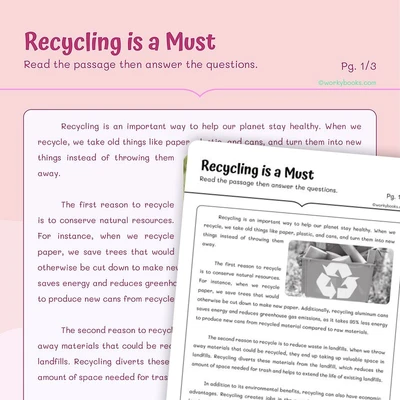
RI.4.85-ESS3-1
Natural Factors affecting Climate
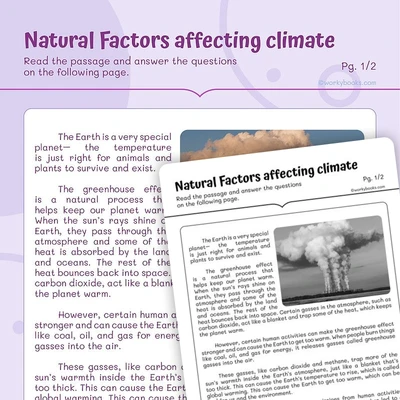
This science worksheet is designed to help students understand the significant impact of natural factors affecting Weath...
RI.4.83-ESS2-13-ESS2-2RI.3.1
Human Factors Affecting Climate
This science worksheet is designed to help students understand the significant impact of human factors affecting Weather...
RI.4.83-ESS2-13-ESS2-2RI.3.1
Kit Fox
The Kit Fox is a small yet agile desert animal known for its distinctive large ears and long, bushy tail. These ears not...
RI.3.1RI.4.4RI.4.8
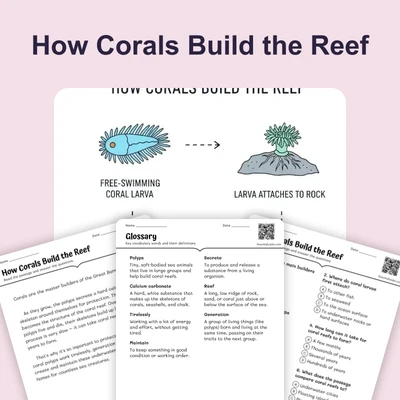
How Corals Build the Reef
This passage explains the fascinating process of how coral polyps build the Great Barrier Reef. It details the life cycl...
RI.3.8RI.4.8
Efforts to Save the Great Barrier Reef
This passage outlines various efforts to protect and preserve the Great Barrier Reef in the face of climate change. It d...
RI.3.8RI.4.8
Main Idea and Supporting Details in Informational Text