
How Corals Build the Reef
Interactive passage with audio narration, comprehension questions, and printable PDF.
What's included
How Corals Build the Reef preview and details
About this printable How Corals Build the Reef science reading passage, NGSS-aligned (Grades 2-4)
Sample passage and quiz from How Corals Build the Reef
Reading passage and comprehension quiz preview
How Corals Build the Reef
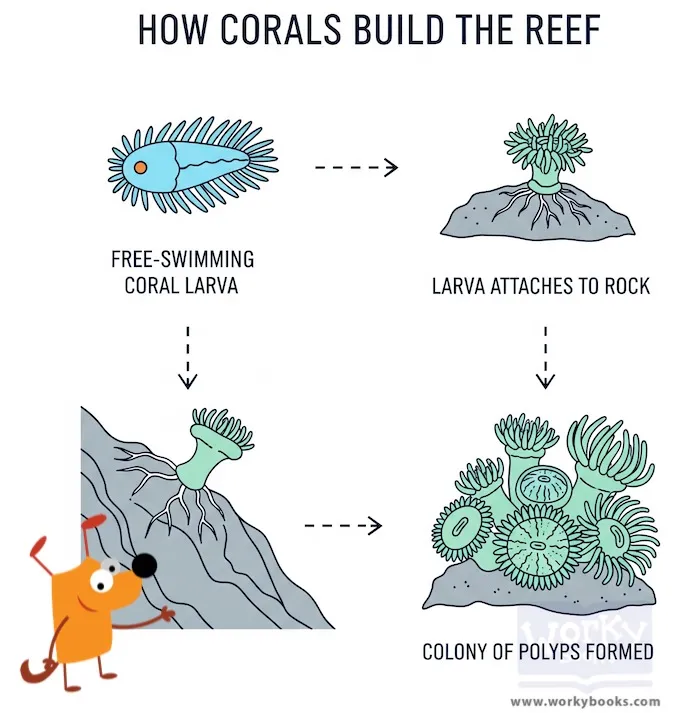
Corals are the master builders of the Great Barrier Reef.
As they grow, the polyps secrete a hard calcium carbonate skeleton around themselves for protection. This skeleton becomes the structure of the coral reef. Over time, as more polyps live and die, their skeletons build up layer by layer. This process is very slow – it can take coral reefs thousands of years to form.
That's why it's so important to protect existing reefs. The coral polyps work tirelessly, generation after generation, to create and maintain these underwater cities that provide homes for countless sea creatures.
Comprehension quiz (6 questions)
1. What are the main builders of coral reefs?
2. Where do coral larvae first attach?
3. What do coral polyps secrete to protect themselves?
4. How long can it take for coral reefs to form?
5. Why does the passage say it's important to protect existing reefs?
6. What does the passage compare coral reefs to?
Common Core standards for How Corals Build the Reef
Perfect for the way you teach
- Build comprehension skills
- Auto-graded quiz
- Differentiated reading
- Read together at home
- Improve fluency
- Quiet reading time
- Reading curriculum support
- Independent practice
- Track Lexile growth